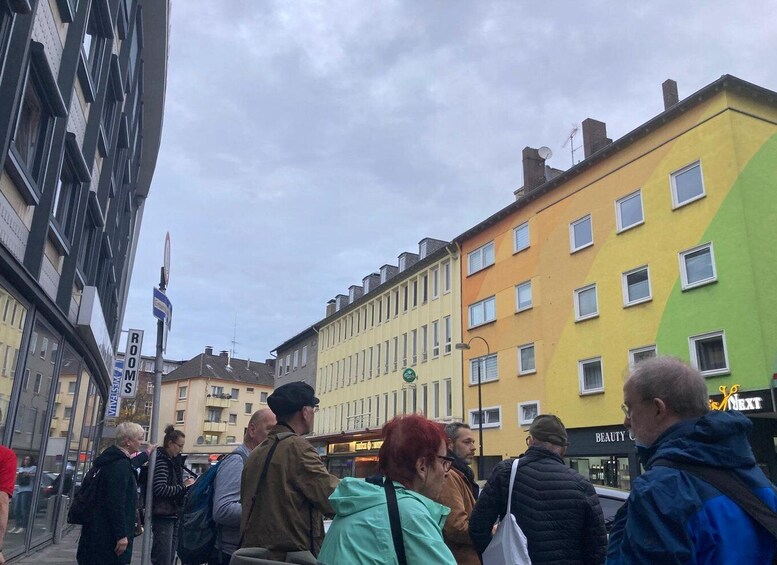
We begin our hike on the 3,000-year-old Westenhellweg, which was a trade route from the Meuse to the Memel and was also used for salt production. After that, we walk to the Freistuhl, which has appeared in Dortmund's historical sources for 1000 years. From here, we go to the KrügerPassage, where stock exchange activities and many events took place until 1943.
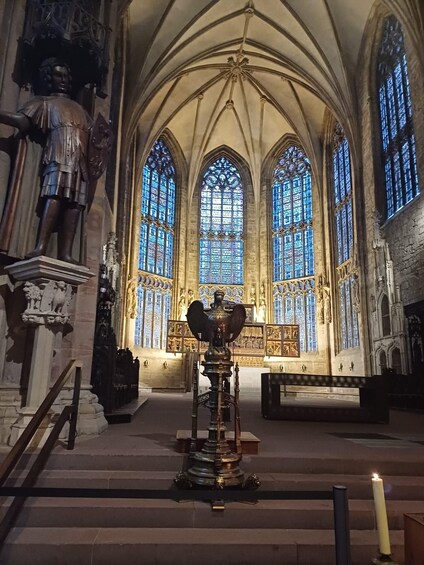
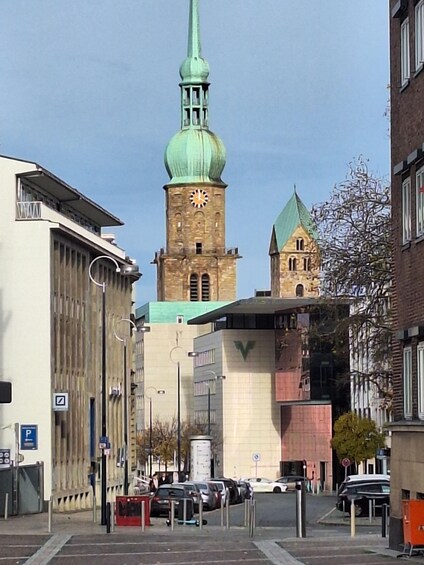
We will circle the venerable Protestant St. Reinoldi Church via Kampstrasse. Here you can hear a lot from the guide about the financial and commercial history of Dortmund, and, when the church is open, you can also see a lot. The beginnings of the Brückviertel district in front of us date back to the time of Charlemagne (768-814). Only the name remains from the Burgtor, the nearby royal court. We read the place name Gnadenort. An older name from 1610 is “Quaden Ort” or “Quaemort.” This means something like “nasty, swampy, gloomy, bad place.”
As early as the 9th century, Brückstrasse was the main thoroughfare for Dortmund due to its convenient location as an crossroads between Hellweg and a major north-south trade route. The street market previously held there moved to the market square on Trisselgasse, now known as the Old Market, due to space constraints. Dortmund was faced with the problem that all the roads were often under water, and “bridges” and planks were laid to allow the merchants' wagons to pass. Balkenstrasse was first mentioned by name in 1342 as “Lohus (Lohhaus) subter Trabes” (under the beams), and at the end of the 14th century, in addition to the name “Balkenstrate,” it was also called “Gruetstrate.” This name was derived from the Grüttehaus, the Ratsbrauhaus opposite. Balkenstraße used to be a log dam for the merchants' wagons, hence the name Balkenstraße. After all, the name of Dortmund means “Throtmanni”: settlement on the gurgling waters.
Our walking tour ends at the old market on Trisselgasse: Minor crimes and fraud during market trading were publicly ostracized here:
The fraudulent market trader was “getrieselt,” meaning he was placed in a visible cage, the Trissel.